Nash Metropolitan on a Bus

Nash Metropolitan on a Bus


I took this photo outside of Iowa City, Iowa about 4 years ago when Amanda and I went to visit the University of Iowa. Off on the side of the road was this abandoned bus, and oddly enough, there was an old rusty Nash Metropolitan on top of it.
Everybody’s in the Dog House

When the goats went up to the breeders in early December it was decided that they would stay there through our Christmas vacation. That way she would, hopefully, have enough time to see if they came back into heat to be sure if they had successfully mated. With Melina we were certain because she went into heat a few days after arriving and did not come back into heat. Cissy decided to wait until right before Christmas, so we’re just hoping for the best with her. Goats are typically pretty easy to breed.


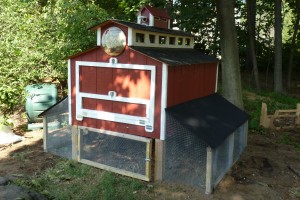
My chickens and goats have happily cohabitated together since we got them. However, when I was showing my chicken sitter, Tonya, around before we left to remind her of the things that needed to be done (she has done this before for me several times and is a very busy dog walker in our neighborhood), she seemed a little nervous about some chickens being in the small ‘breeder’ coop and some being in the big coop. How would she know if everyone was in the right coop at night? How could she properly do a head count every night? While this seemed easy to me every day, I could understand anybody else having some trepidation around it. So, as the chickens in the breeder coop were now full grown and getting a little crowded in there, I made a decision just a few days before I left for Wyoming to “merge the tribes” to make Tonya’s job easier.


Now chickens by nature like routine. When the sun starts to set they go home to roost for the night. Our neighbor’s will sometimes call us in the summer saying that our chickens have wandered into their yard, but we tell them not to worry; they will come home when the sun starts setting, and they do. They also will normally go to the same house, even if there are several coops on your property. However, I have had chickens visit other coops for the night, or form friendships with a particular chicken or different clan and change their coop permanently. So, in the hope of making Tonya’s job easier I decided it was time to merge the girls into the big coop. They had been free-ranging in the yard together for a few weeks, so were by then familiar with each other. Chickens need time to get to know one another. Don’t ever throw two adult chickens that don’t know each other together — they would probably fight pretty badly and hurt each other.

That afternoon when they were all out free-ranging around the yard I went and locked the door to their ramp so they couldn’t get in. Now chickens aren’t all that bright, so I knew they wouldn’t say to themselves, “Hey, our door is locked but the door to that other coop is open so let’s go in there.” Sure enough, come nightfall they were all sleeping outside the locked fenced entrance to their coop. I had to, one by one, pick them up and carry them to the new coop. The next night most of the girls went to the new coop, but their a few that I had to hand-carry in the dark to the new coop again. By the 3rd night they were all adjusted to their new home and Tonya had a much easier job of it.
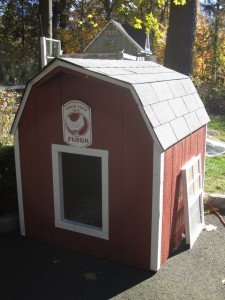
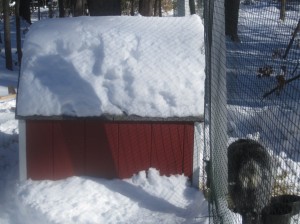
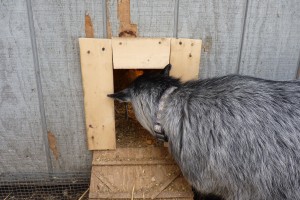
However, when I returned from our Christmas vacation in Wyoming, I picked the goats up two days later and they now had nowhere to live! Kicked out of their own home! I had been planning on looking into a larger facility for them all, but as usual, time gets away from me. I did, however, have this lovely enormous dog house (41″ W x 45″ L x 52″ H) that I had bought for them as a run-in shed probably a year ago that as been sitting in my driveway ever since. I even bought playhouse windows that open and close that I will install come summer so it will have plenty of ventilation when it’s hot out. For now they need the warmth so the windows weren’t an issue. Getting the dog house up to the fenced in area took the strength of my two neighbors, Jim and me, but we got it moved into place up against the fencing. I cut a hole out of the fence for the entry door and staple gunned the fencing down to the front of the house. It’s not perfect, but it’s not permanent either.

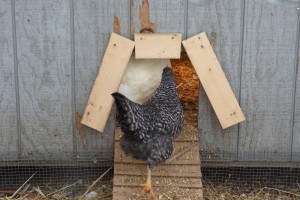
To keep the goats out of the chicken coop (although Melina was so fat that she could barely fit through the door before she left), I had to build up the molding around the doorway to prevent them from squeezing in to the house and getting at the chicken food, which makes them wheeze and gives them the runs.


The goats fiercely protested their banishment from their house for the first few days. Refused to step foot inside of the dog house and no matter what time of day or night I went outside if they heard me they would start screaming at me at the injustice of it all. After a few days though they discovered that it was quite roomy, had a nice bed of straw and hay in it to keep them warm and dry and there were no chickens to use them as perches. Privacy at last.

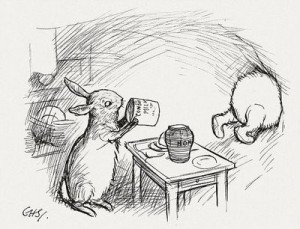
However, the chickens also decided that this was a pretty nice place to be, and that it was particularly nice for laying eggs in. So now every day I have to squeeze my fat ass through the dog house door and feel around for eggs. Luckily them seem to lay them in the corners so it’s not all that difficult to find them, as long as I don’t get stuck in the doorway like Winnie the Pooh.

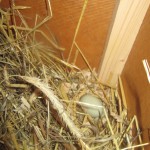
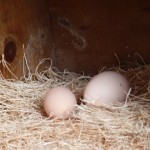
And every day I find eggs in the corners of the dog house.


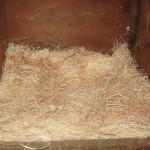
Now while some chickens do lay their eggs where they should — in the coop nesting boxes, I remembered that I had bought this nesting box material for the new chicken/goat house I’m planning on adding so thought I would put some of that in the nesting boxes to see if that might entice them to lay all of their eggs in there. It’s been pretty successful, but I’m still finding eggs in the dog house every day.

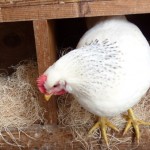
Today I went out to discover that somebody (named Melina I suspect) had literally pulled the molding off of the chicken door (I had nailed it in with pretty big nails) and there she was in the chicken coop!


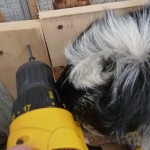
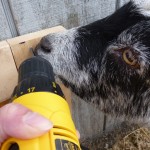
Just try doing some work with curious goats in the way…while Melina’s trying to eat the screws and butt the screwdriver out of the way Cissy was chewing on my rear pants pocket.


I used screws this time. We’ll see if it works.

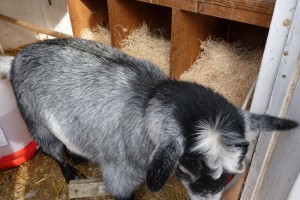
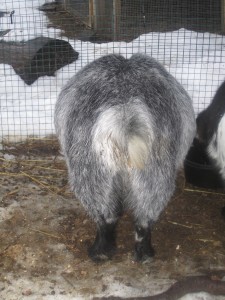
Oh, and just so we can start comparing the growth of the goat’s already large girth, I’ll share these photos with you taken today.


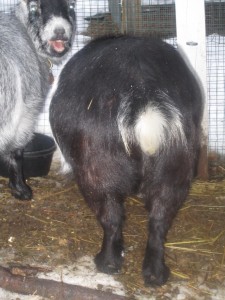
And here’s Cissy, who’s never been quite as chunky as Melina is.


Now they’ve got 4 1/2 more months to go in their pregnancies. Goats most often give birth to twins. It will be interesting to see how large they get! I’ll keep you updated on that as the months go on.

The fun never ends here on the farm. There’s always something to make me laugh, or somebody that needs their head scratched, or something that needs fixing. I wouldn’t trade it for the world.

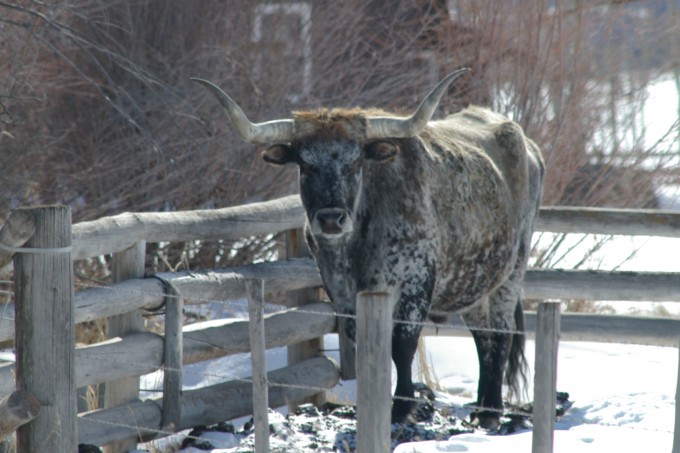
Texas Longhorn on a Snowy Day

Texas Longhorn on a Snowy Day

He Left With Dignity & Grace


I went to a memorial service today for a friend of mine that passed away last week of cancer. He was a lovely man. Although I only knew him for a couple of years, I always loved being in his company. He was soft-spoken and always remembered your name. One of those people you couldn’t wait to hear speak, as he always seemed to have something wise, meaningful or insightful to say. He was a deep man.

His family did an amazing job planning the service, as it, unlike many funerals I have been to, seemed to be so personal. You could tell, that he was a part of the planning as the service was deeply personal. The first hymn we sang was “Amazing Grace”. Now this may sound rote for many funeral services, but when singing it at his service, the words seemed written just for him.

Amazing grace! How sweet the sound
That saved a wretch like me!
I once was lost, but now am found;
Was blind, but now I see.

He described himself as a wretch all the time! At least he claimed that he used to be one. He certainly wasn’t anymore; not the man I came to know.

‘Twas grace that taught my heart to fear,
And grace my fears relieved;
How precious did that grace appear
The hour I first believed.

A decorated vietnam green beret veteran who (we were told by everyone who spoke at the service) had a very difficult and challenging life that included alcoholic parents. He got sober probably around the time that I did, and I’m sure, like I have, he had changed for the better because of it. His son said as much; how proud he was of his father for breaking the cycle of alcoholism.
He was diagnosed this summer and was told he didn’t have long. He made it six months. He died at home surrounded by his wife, daughter and son.

Yea, when this flesh and heart shall fail,
And mortal life shall cease,
I shall possess, within the veil,
A life of joy and peace.

Both his daughter and son spoke at the service. Their thoughts, while quite different in style, were equally touching and very moving.

The second hymn was “I Sing a Song of the Saints of God”. Part of the hymn included these words:

They lived not only in ages past;

there are hundreds of thousands still.

The world is bright with the joyous saints

who love to do Jesus’ will.

You can meet them in school, on the street, in the store,

in church, by the sea, in the house next door;

they are saints of God, whether rich or poor,

and I mean to be one too.

I saw him just before I went away for the summer and he came and sat next to me on the curb where I was sitting. We sat and chatted for some time. I wonder now if he already knew, because it wasn’t long after that he announced to his illness to his friends. I saw him several times this fall, each time looking more ill and frail.

The service ended with all singing” Joyful, joyful we adore thee”. I know I adored him.

There were probably 200 people or more at his service. but for many in attendance I think the hymns and words had a deeper meaning that just words in a hymnal.

I never would have met him if we didn’t share the same disease. I have all sorts of wonderful people in my own life that I never would know under any other circumstances than for the disease we share. Thankfully, that disease is not the one he died from. He never complained. Never seemed to feel sorry for himself. He was thankful for the what God had given him and the life he had.

I’ve always liked to think of Heaven as it was written in the book by Alice Sebold called The Lovely Bones; someplace where my friend could look down from and see all of his family and friends gathered there today to pay tribute to him. He would have been touched at how many new friends he has made in the past few years. How loved he was. How he changed us by allowing us into his life.

He died with dignity and grace.

Nothing Goes to Waste

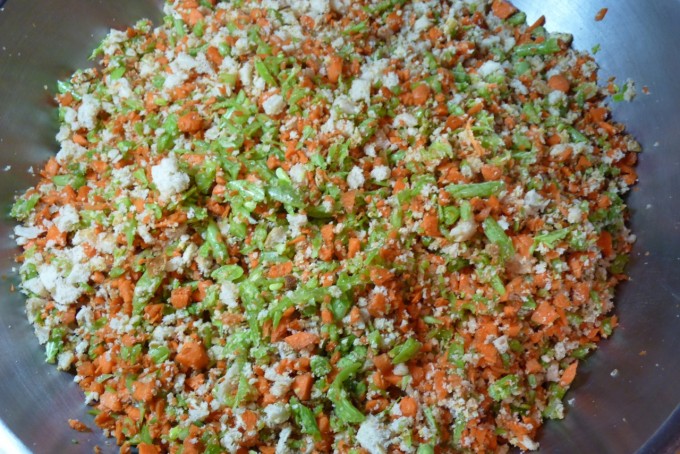
The final product of processed vegetables and bread

One of the great things about having chickens and goats is that you nothing goes to waste. When I’m cooking dinner at night or cooking for a blog post all vegetable and fruit scraps, broccoli stalks, vegetable & potato peelings all go into a bowl for the animals. Every week of so I go through my vegetable & fruit drawers in the fridge and the bread storage area in the pantry and pull out those things that are past their prime. I don’t use moldy bread, but if I’ve bought a new loaf of bread or english muffins and still have some of the old at home, I’ll use that. I also never use really rotten fruit or veggies. In this example I had a big bag of string beans that I’d never gotten around to cooking that were a little bit slimy (I washed them before using) as well as three bags of carrots – 2 of which were getting a little hairy and old looking.

I pull out my cuisinart, chop things up a bit, and pulse them in the food processor to make delicious chicken and goat food. It’s especially nice for them at this time of year when there’s not many bugs around and certainly no green grass to nibble on with all the snow we’ve gotten lately.

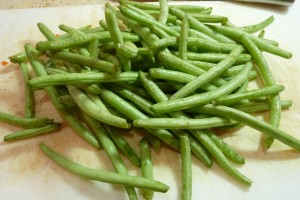
Slightly slimy, but washed green beans


A little hairy but perfectly good carrots


Old english muffins and whole grain bread

I chop things up. Now if I just had goats I would make it much coarser than I do. But since Melina & Cissy are a little on the heavy side, I like to grind mine pretty fine so they have to work harder to eat it. Plus with their pregnancies I don’t want them getting any fatter than they already are! For chickens it needs to be ground pretty fine. You’d be amazed at the size of some things I’ve seen a chicken fit down it’s throat, but I prefer to not make them do this.


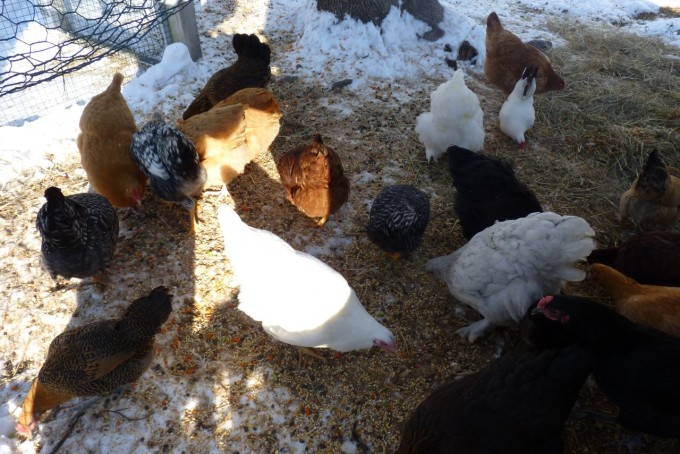
I usually get quite a large bowl of finished feed, so I’ll just stick it in the fridge and once or twice a day take a bowl of it out and throw it around for them.

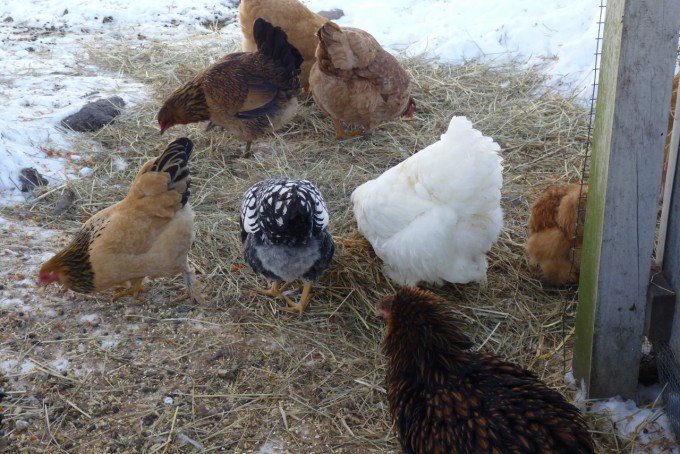
Everyone comes running when they see me, hoping that I might have some yummy treat for them.

Delicious


Yummy Treats on a Cold Winter Day


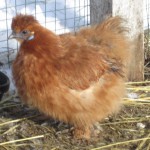
Isn't She Beautiful?

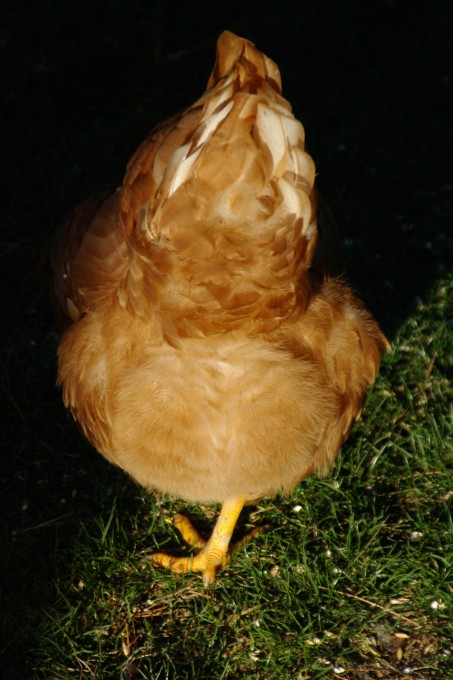
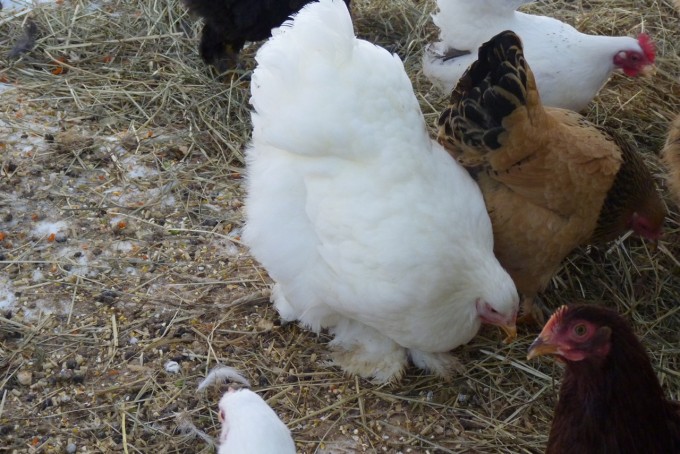
Sun Shining on a Fluffy Chicken Butt

Sun Shining on a Fluffy Chicken Butt

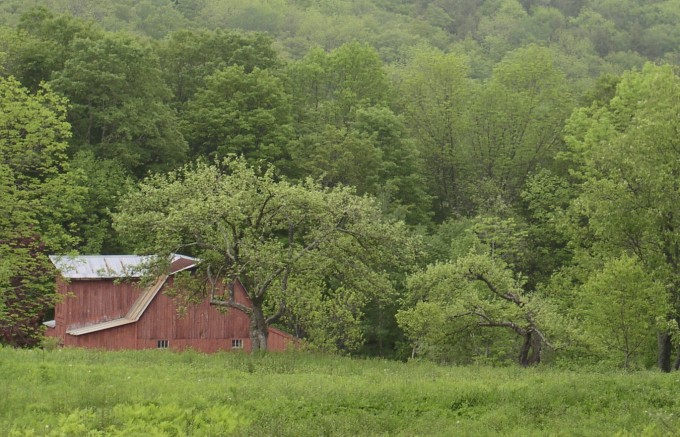
Red Barn with an Apple Tree

I took this photo in Vermont a few years ago when I took Jim away for a birthday surprise.

Infinity Scarf

I’ve seen a lot of people wearing these great looking scarves around lately that kind of twist around their necks and seemed to be one piece. I even found a knitting pattern for one to try, but of course messed it up within the first row or two and gave up (anything beyond a simple scarf or hat and I’m lost when it comes to knitting). The other day I got an email from Craftstylish and there was a pattern for making an infinity scarf (although they called is a Mobius scarf as well).

This was super easy to make, didn’t require a lot of fabric and can be done with so many different fabrics – a soft fleece, a sweater knit, faux fur, or I even made one for Amanda out of a bucle knit. The one issue I did run into is that the pattern called for the fabric to be 72″ long, and that is a very difficult length to find. I think if you want a lot of drape in your scarf you’d need it to be that long, but would probably have to piece to sections together to create that length.

What you will need:

  1. Marking Charlk and ruler
  2. a 72″ long x 21″ wide rectangle of fabric.
  3. Scissors
  4. Thread
  5. Sewing Machine

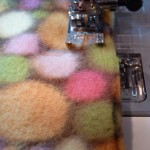
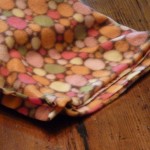
Cut a 72-inch-long by 21-inch-wide rectangle of fabric (see note above about fabric length). Since fabric at stores never seems to be cut quite evenly, I find it safer to order either 5/8 of a yard (22-1/2″) or 2/3 of a yard (24″) just to be safe. When you get the fabric home, lay it out in one long length and fold it in half to get it evenly on center. From that center point you can measure up 11-1/2″ and mark that along several places of your fabric length. Using a ruler draw that line across and cut to get an even 21″ length. The fabric I used for these photos was very straight on one end and quite en-even on the other so I just measured up 21″ and marked along that line.


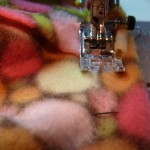
With right sides together and long edges aligned, fold the scarf in half. I cut off the manufacturer’s printed edge too. I also pinned the edges together. Especially with a thicker fabric like a fleece I find the fabric tends to ‘creep’ as you sew and this helps prevent it. machine-sew the long edge with a 1/2-inch-wide seam allowance.
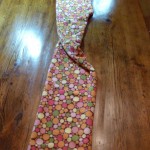
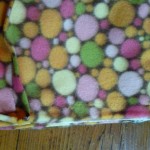
Add a twist. Turn the scarf right side out. Twist one end of the scarf to add a kink in the design.


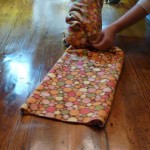
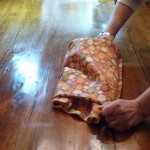
Join the short ends. Fold the scarf in half by pulling it over itself as shown with right sides together and the short raw edges aligned. It will look like a long tube with the fold at one end and the raw edges at the other. Machine-sew around the raw edges with a 1/2-inch-wide seam allowance, leaving a 4-inch-long opening.


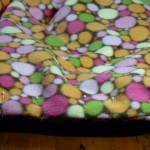
Finish the scarf. Turn the scarf right side out through the opening. Hand-sew the opening shut.


Make your scarf as long or as short as you like. Wrap it a few times as shown, or wear it long and loosely draped. If you only use a 60″ length of fabric though you won’t have much of a choice about that – you can get two loops around your neck, but depending on the weight and thickness of fabric you choose, there won’t be too much “loose draping going on”.

Excuse Amanda's appearance here - it was about 10:00 on the night before she was leaving to go back to school from Christmas break and had been packing all day.


Excuse Maia's appearance here - she was on her way to bed when I threw this thing over her neck that I'd just finished sewing. Her hair was so dry and staticky she was practically electricfied.

My Retro Egg Cartons


When I attended the 3rd annual Young Farmer’s Conference in December  one of the most interesting classes that I attended was called “Designing and Running an Animal Welfare Approved Pastured Egg Operation”. It was a really interesting presentation and you can get Animal Welfare Approved certificates for the following species:  Chickens, hogs, beef cattle, dairy cattle, meat sheep, dairy sheep, meat goats, dairy goats, turkeys, ducks & bison. Having this label certifies that you raise your animals only on pasture or range and that you treat your animals with respect and compassion. It is also USDA approved. The organization charges nothing for their services. Once they determine that your farm – big or small – fits their criteria they will come out and audit your farm. If your farm meets their requirements they will help you with label design and any other materials that you require and help you every step of the way.

There is significant data that shows that people are willing to pay more for something that they know is humanely raised, even if it ends up on their dinner table. I’m a meat eater. I don’t see that changing any time soon. However, I am willing to pay more money for a product that I know was raised in a humane way and slaughtered compassionately (is that an oxymoron?). And don’t fool yourself when you’re buying your eggs in the grocery store and reach for the “free range eggs”. The USDA guidelines for free-range eggs is that “the chickens have a door that allows them access to the outside.” At a large-scale factory farm in a barn with thousands of chickens one door might allow them the ‘opportunity’ to go outside, but that doesn’t mean that they’ll have access to grass, weed seeds or insects; It may only be a concrete slab. For chickens to produce the most healthful and flavorful eggs and meat, they need to be able to eat a variety of green plants, seeds and bugs. Unfortunately, you can’t always tell how the chickens live by reading the package in a store. I’d encourage you to find a local farmer who raises poultry on pasture. You can read more information on this on Mother Earth News. One day (if you don’t own your own chickens), pick some up at your local farmer’s market and compare it to your normal run-of-the-mill grocery store egg. Look at the difference in the yolk color. factory farmed eggs’ yolks are a very pale yellow. Fresh pasture-raised eggs are a vibrant orange color. pastured eggs we offer have more beta carotene, vitamin A, vitamin E and Omega-3’s and less cholesterol and saturated fat than factory farm eggs

One of the lovely presenters at this class was a woman named Georgia who owned Kinderhook Farm in Ghent, New York. She was so enthusiastic about her farm and the program. She raises laying chickens, beef cattle and sheep on a 100% grass and legume diet and all of her animals are Animal Welfare Approved. She was currently working on adding meat chickens to her operation. Her farm is definitely someplace I will visit this spring to see how she runs everything.

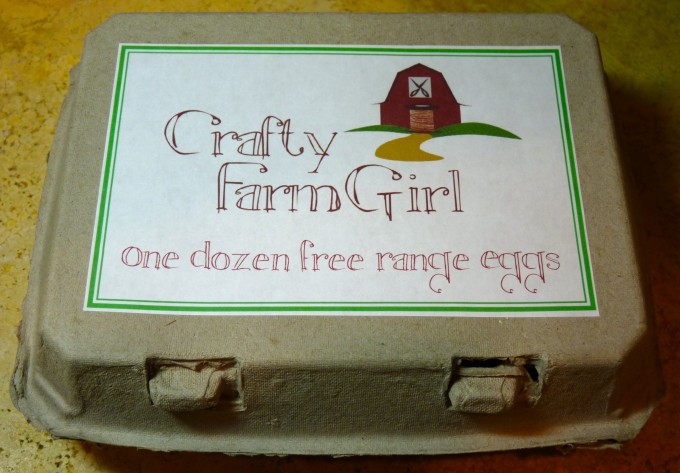
She had on display the egg cartons that she was using for her eggs that she sold directly from her farm store. They were apparently a retro design of an old-style egg carton and I just loved the different shape. I thought they would stand out from other cartons. She bought them on EggCartons.com so I of course ran home and ordered some.


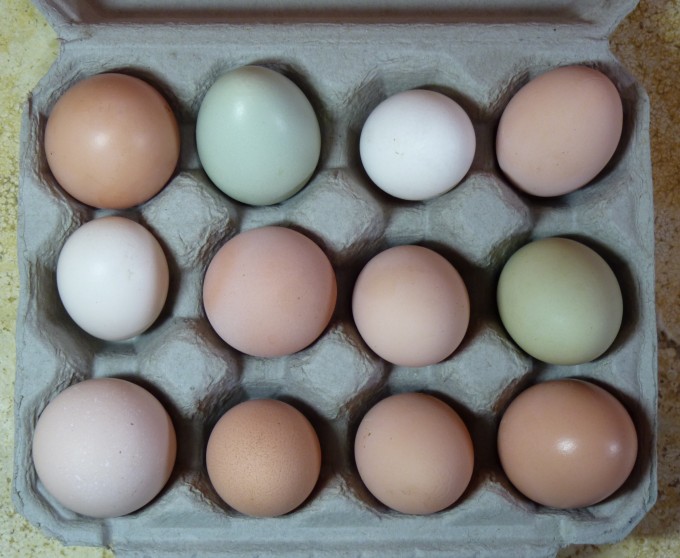
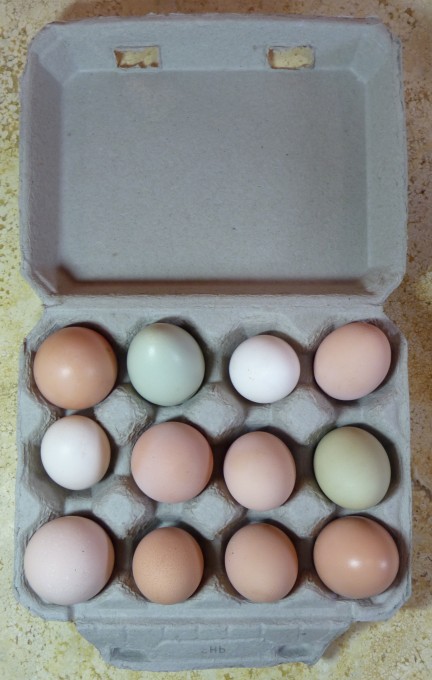
By this summer I will be selling my eggs. I’ve got 27 female chickens that are laying (although it’s always pretty slow in the winter months). Come April or so I’ll be drowning in eggs and am excited to be able to offer them for sale finally. The big question that I haven’t figured out the answer to is how to package them. I have a fair amount of bantam chickens that lay tiny eggs, and the rest of the chickens lay what would be considered “large” eggs by egg classification standards in colors of white, brown and varying shades of blue. I will most likely do some as mixed boxes of varying size eggs and some of just small bantam eggs. They certainly all taste the same.


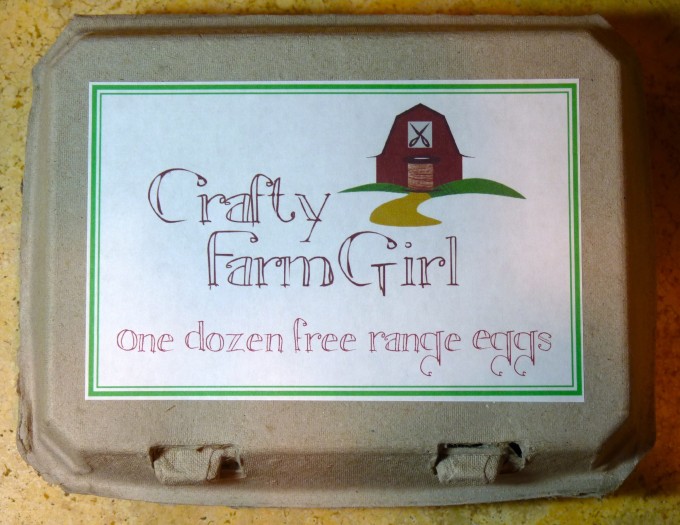
This is the design I came up for a label. This is just a rough idea as I’m not sure what the proper wording should be yet.

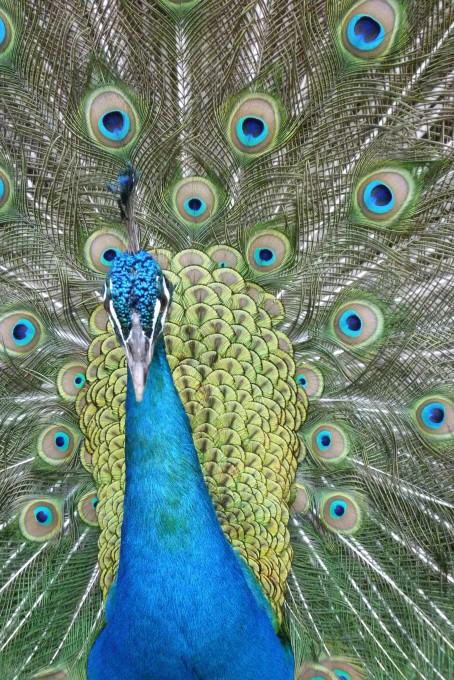
Peacock in Costa Rica

A Peacock in Costa Rica