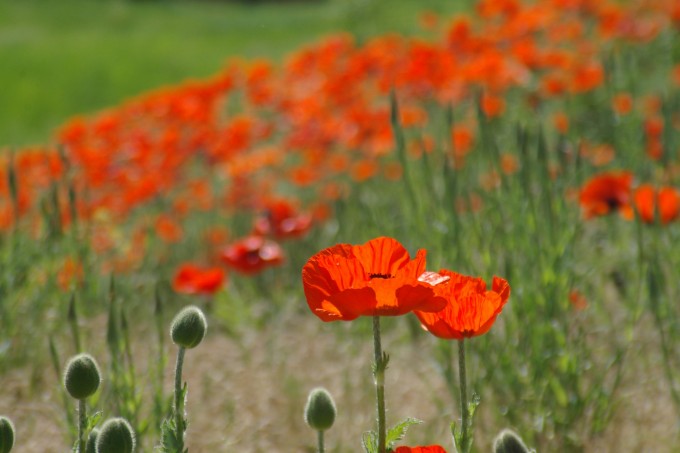
This was taken in Victor, Idaho, just over the Teton Pass. I love the clarity of the front flowers and the vagueness of the out-of-focus ones in the back.
This was taken in Victor, Idaho, just over the Teton Pass. I love the clarity of the front flowers and the vagueness of the out-of-focus ones in the back.
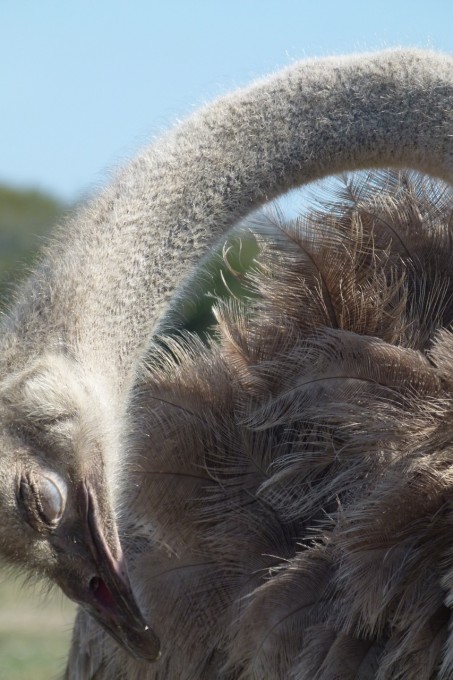
This lovely emu was at the National Bridge Wildlife Ranch outside of San Antonio. She was preening herself and I caught her in this lovely position. Unfortunately I didn't get the shot of Amanda frantically chucking the entire bag of animal food out the window so this curious emu would stop sticking her head through the window looking for snacks.
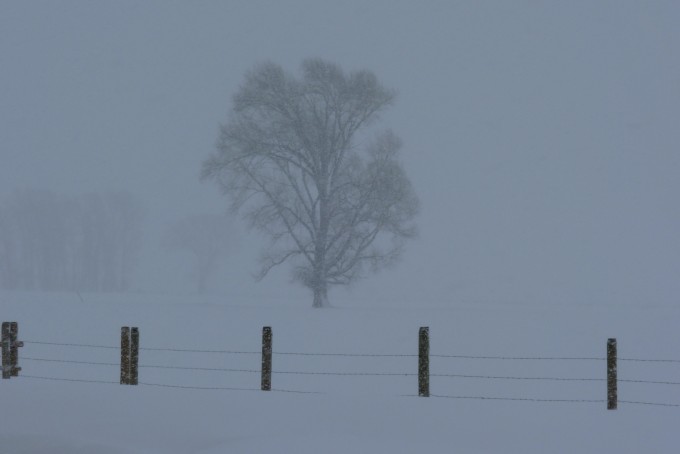
Since winter doesn't seem to want to leave the state of Connecticut, I thought I'd kick off spring with this photo I took during a blizzard this winter in Wyoming. Amanda and I were out in search of the elusive Frosty Buffalo. We didn't find him, but I got this lovely shot.
This post is dedicated to the old carpenter’s adage “Measure Twice, Cut Once.”
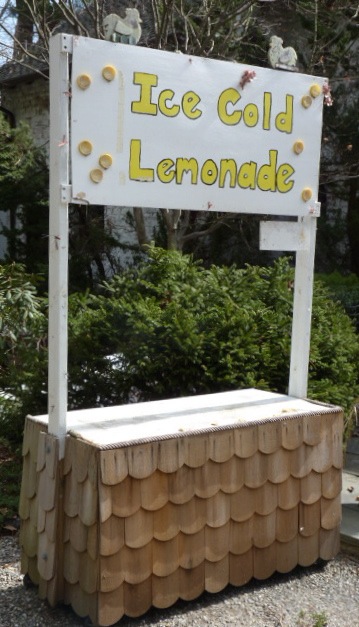
I made a lemonade stand for my kids a few years back over an April vacation that we stayed home. They’ve gotten tons of use out of the thing and it’s big, beautiful, and well-made. I designed it myself and had a lot of fun putting it together. The kids have sold all sorts of things at this stand; lemonade, cookies, organic cupcakes, home-made pickles, and hot chocolate on winter days. Sometimes they rally together to sell stuff, or sometimes just one child decides to drag it up to the curb and will sell by themselves for awhile. Luckily I put it on large industrial rolling (and locking) casters so it’s relatively easy to roll around considering how heavy and large it is. One year Maia spent an entire day outside selling lemonade and cookies and gave all of the $165.00 she raised that day to the Humane Farming Association. The kids raised money to send to Haiti after the earthquak. It’s a fun lesson for the kids on hard work, community, and philanthropic endeavors.
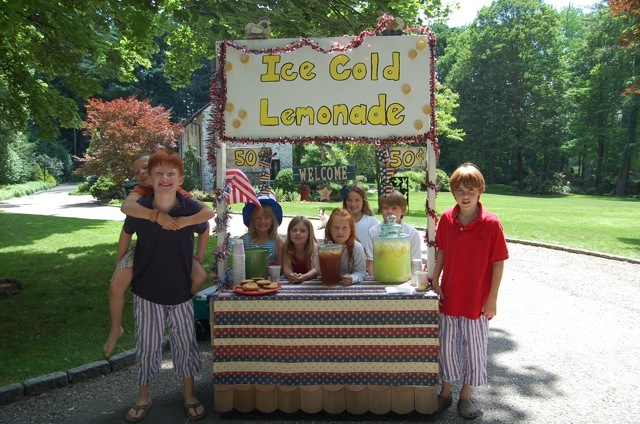
Our friend's the Stewart's came over to help us sell lemonade and cookies one 4th of july.
It surprises me that 3 years later it’s still in really good shape, except that the lemonade sign is getting a little worn and faded and the top of the stand, or counter might be more correct, could use a fresh coat of paint.
I’ve recently started my Free Range Friday’s in which I’m selling my fresh eggs to a small group of people that get an email blast on Thursday night’s announcing that there will be eggs for sale and how many dozens I have. As the summer progresses and my chickens start laying more productively with the warmer weather I will enlarge my email distribution list.
I’ll add things as they become available, like honey later in the summer, excess vegetables from the garden, and home-made pickles, jams and preserves.
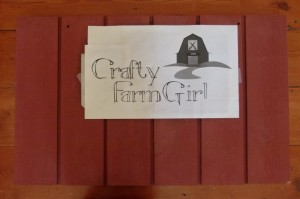
So I thought it was time for a Crafty Farm Girl farm stand sign. I didn’t want to remove the “Lemonade” sign, but wanted to make a farm stand sign that could be removed should the kids want to have a lemonade stand. I wanted it to look more “farmy”, so I thought making it out of 6″ board & batten siding might work well and to give it that barn look I’d use a red milk paint on it. I found a bunch of cute thing to embelish the sign with on sale up at Joan’s Crafts, and blew up my logo at the local Kinko’s so I could transfer the design onto the board.
I started with a piece of plywood I had in the garage. To this I cut the board & batten to the length I wanted, fit them together and screwed them in place onto the piece of plywood. 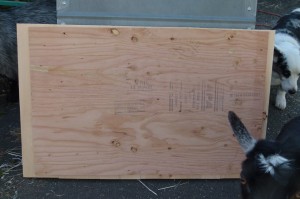
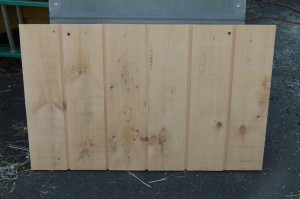
I used a countersink drill bit to make the screw holes so they were recessed into the wood, so I used a quick-drying wood filler and filled all of the screw holes, let it dry, and then sanded it smooth before painting.I also drilled two larger holes clear through the board that would be where I hunt it from on the current “lemonade” sign. I sanded that hole with tightly rolled sandpaper to get rid of splinters and rough wood.
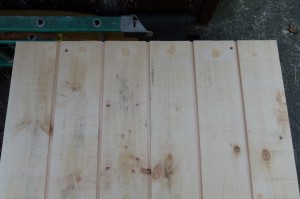
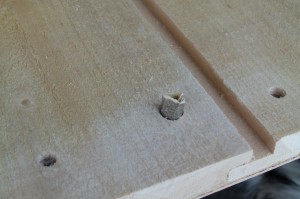
I painted it all over with a barn red milkpaint and let it dry.
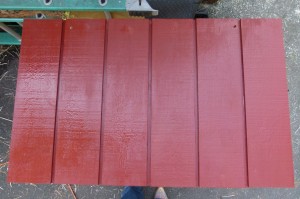
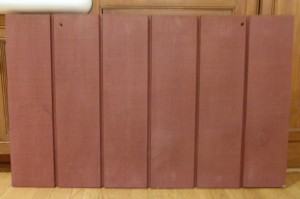
Then using the enlarged logo I’d copies and some carbon paper I transferred to lines of my logo onto the board.
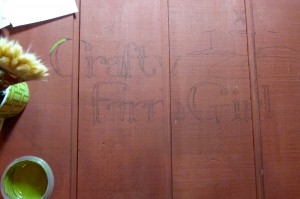
Then I painted the logo using a combination of milk paint and craft paints.
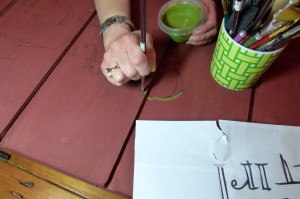
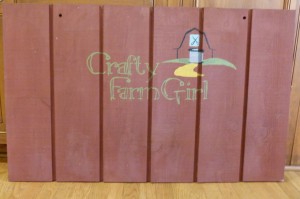
Now I attached the rooster weathervane and the two birdhouses to the top of the sign. All finished and ready to hang up on the lemonade stand. I measured the two hanging holes and drilled in two really large screws into the original ‘Lemonade’ sign to hang the new farm sign from and lifted it into place.
IT’S TOO SMALL! There’s like 6″ on each side where you can see the old lemonade stand behind the farm sign!
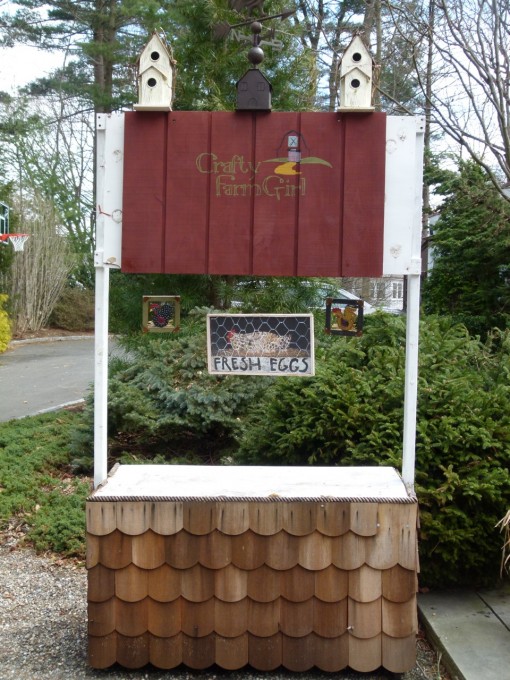
This is where I’m finally coming around to the first sentence of this entry. My dad taught me “measure twice, cut once” throughout my life. I have learned by that mistake on more than one occasion. I measured the existing sign probably 3 or 4 times, and even added to to the measurements so it would completely cover the sign., yet somehow here it is; too small. I’ve been busy formulating how I will fix this in my head and I think I’ve come up with a plan. It’s going to drive me crazy until I get it right.
In the meantime, here’s the sign for now. Heavy sigh.
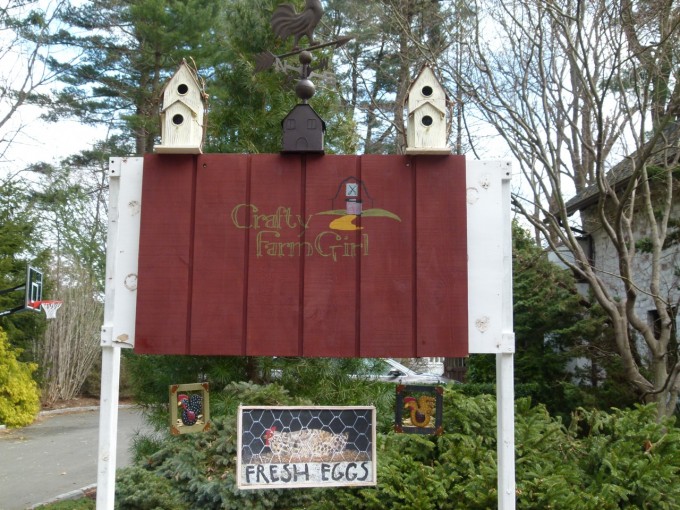
The Finished Sign - Let's call this the First Edition. I can switch the sign on the bottom to reflect whether I've got eggs...
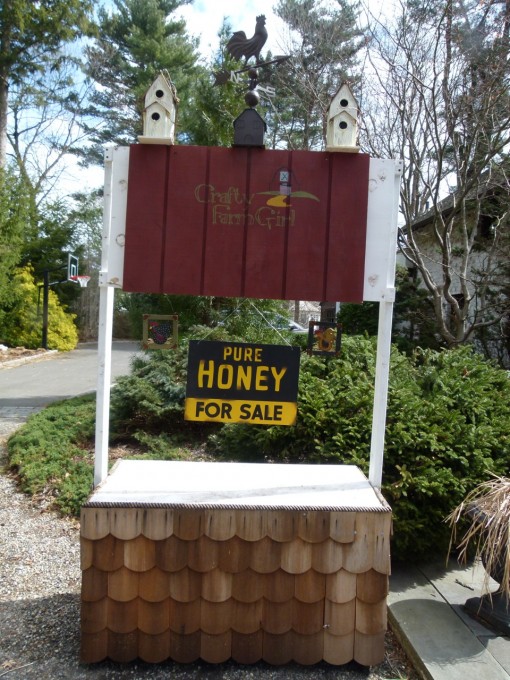
or Honey for sale.
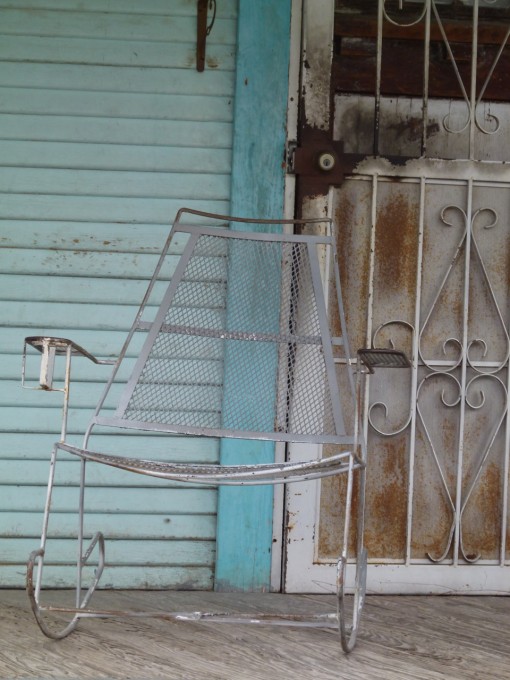
I took this down in San Antonio in the King Charles Historic District. It was such an interesting neighborhood, ranging from really beautiful completely renovated houses to houses that were more of the run down variety.
Just about a year ago I posted my original Twinkie recipe. I thought I’d follow that classic up with my Chocolate Twinkie a year later.
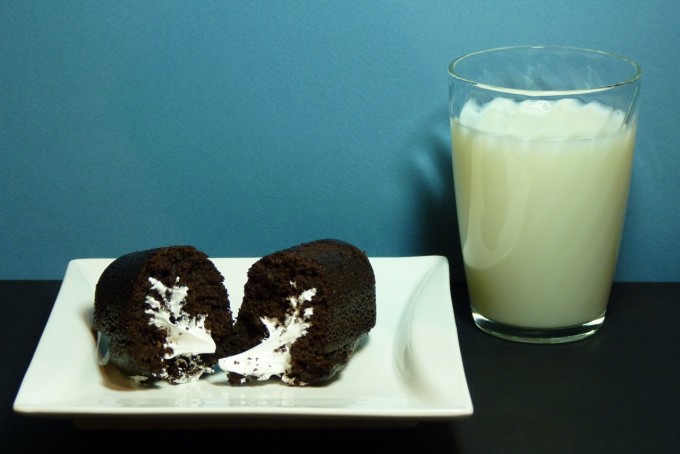
On a side note, should you be thinking about trying either the original Twinkie recipe or this Chocolate Twinkie recipe and are in need of the special pan, I put a search on eBay for a “Twinkie Boat Cakelet Pan” for a month and got a surprising number of hits from that search. For all I know they’ve become easier to find in the past year, but a year ago they were hard to come by. Also note that in the following photos I was making a double batch of the recipe.
Original recipe by Williams-Sonoma. Adapted by Crafty Farm Girl, 2011©
When making the filling, be sure your electric mixer bowl, whisk and beater are spotlessly clean. Any spot of grease or fat will prevent the egg whites from expanding to their full volume.
Ingredients:
For the cakelets:
1 cup all-purpose flour
3/4 tsp. baking soda
3/4 tsp. salt
8 Tbs. (1 stick) unsalted butter, melted
1 egg
1 tsp. vanilla extract
1 cup sugar
1/3 cup Dutch process cocoa powder
2/3 cup boiling water
For the filling:
2 egg whites
2/3 cup sugar
1/4 cup light corn syrup
Pinch of salt
1/2 tsp. vanilla extract
Directions:
Have all the ingredients at room temperature.
Preheat an oven to 325°F. Generously grease and flour an 8-well cream boat pan. Note: My pans were a very good non-stick variety, so I did not find it necessary to do more than a quick spray of cooking spray.
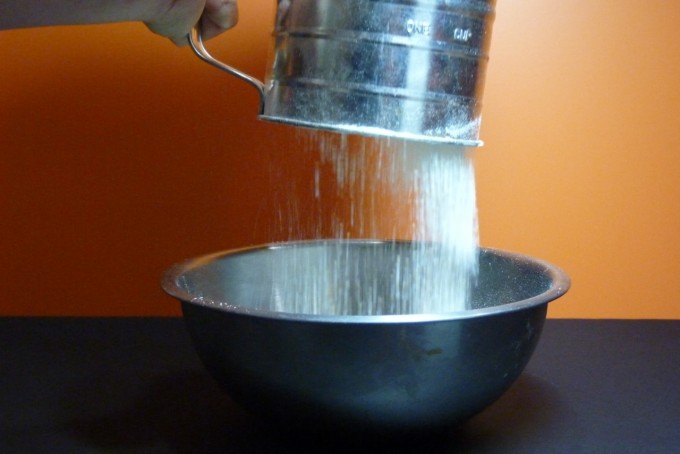
To make the cakelets, over a bowl, sift together the flour, baking soda and salt; set aside.
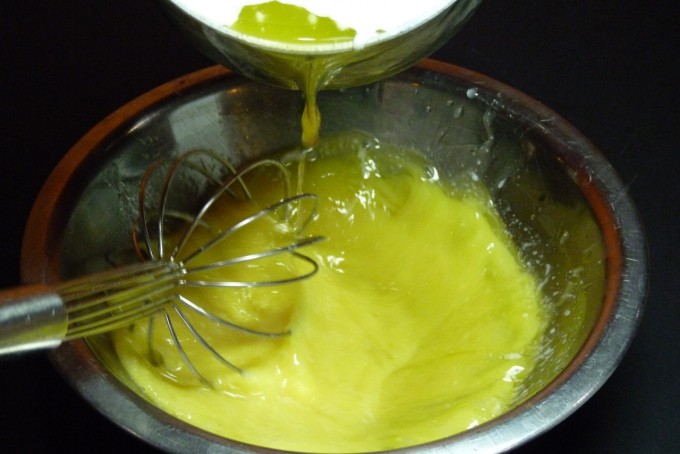
In a small bowl, whisk together the butter, egg and vanilla; set aside.
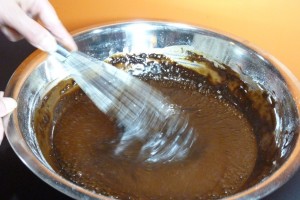
In a large bowl, whisk together the sugar and cocoa powder. Whisk in the boiling water, then whisk in the butter mixture.
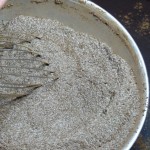
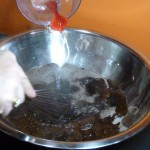
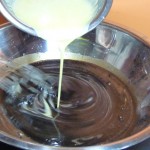
Add the flour mixture in two additions, whisking until smooth and no lumps of flour remain.
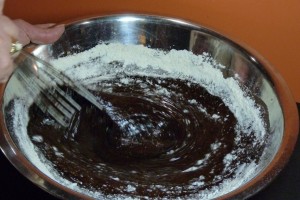
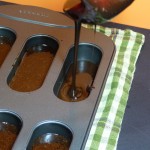
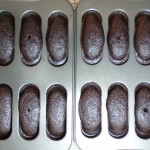
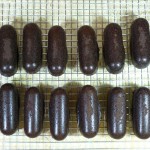
Divide the batter among the wells of the prepared pan, filling each individual pan until about 3/4 full. Bake until the cakelets spring back when touched and a toothpick inserted into the center comes out clean, 17 to 20 minutes. Transfer the pan to a wire rack and let the cakelets cool for 10 minutes. Invert the pan onto the rack, gently tap the pan bottom and lift off the pan. Let the cakelets cool completely.
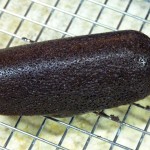
Meanwhile, make the filling: In the bowl of an electric mixer, using a handheld whisk, beat together the egg whites, sugar, corn syrup and salt just until combined. Place the bowl over but not touching simmering water in a saucepan and whisk until the sugar dissolves and the mixture is hot, 2 to 3 minutes.
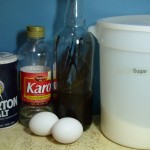
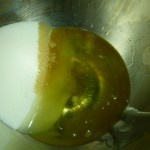
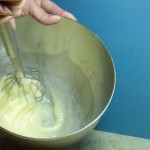
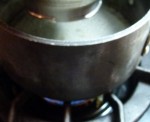
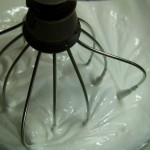
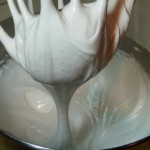
Set the bowl on the mixer fitted with the whisk attachment and beat on medium speed for 3 minutes. Add the vanilla and beat until the outside of the bowl is cool and medium-firm peaks form, 2 to 3 minutes more.
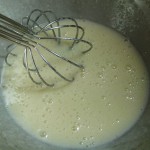
Spoon the filling into a pastry bag fitted with a 1/4-inch plain tip. Insert the tip 1 inch into the bottom of a cakelet. Gently squeeze the filling into the cakelet while slowly withdrawing the tip. Repeat in two more places along the bottom. Turn the cakelet over so that the filling holes are on the underside and place on a serving plate. Repeat with the remaining cakelets and filling.
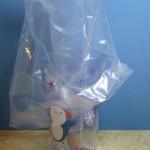
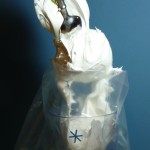
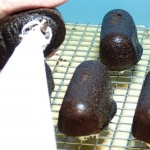
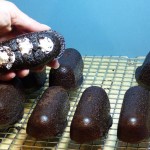
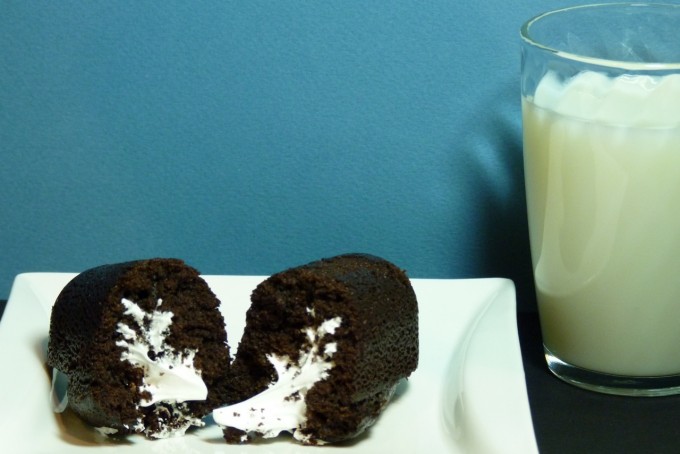
Makes 8 Twinkies. Recipe easily doubles.
 Print This Recipe

A close-up of an Asian elephant at the San Antonio Zoo I took last week. This zoo visit actually had me in tears a few times, and the elephants were one of them. Although they were paired at least, their environment was not suitable for an elephant to be happy. Such incredibly intelligent animals. One elephant was doing this rhythmic repetitive movement back and forth, and this one in the photo was pacing back and forth in it's cement-floor-and-wall-enclosure. Did you know that an elephant uses it's ears to regulate it's body temperature? The ears are filled with blood vessels. Moving the ears cool the blood off by convection, so the cooled blood, when returned to the heart, will cool the interior of the elephant. The blood then picks up heat from the heart, and brings it to the ears again to be cooled off. You can think of an elephant's ears as similar to the radiator of a car. This Asian elephant's ears are much smaller than that of the African variety, which can cool itself off more easily with it's larger ears.

An Okapi at the San Antonio Zoo last week. The Okapi's tongue is long enough for it to wash it's eyelids and clean its ears (inside and out). I wish my kids could do that! This one was clearly proud of his tongue.
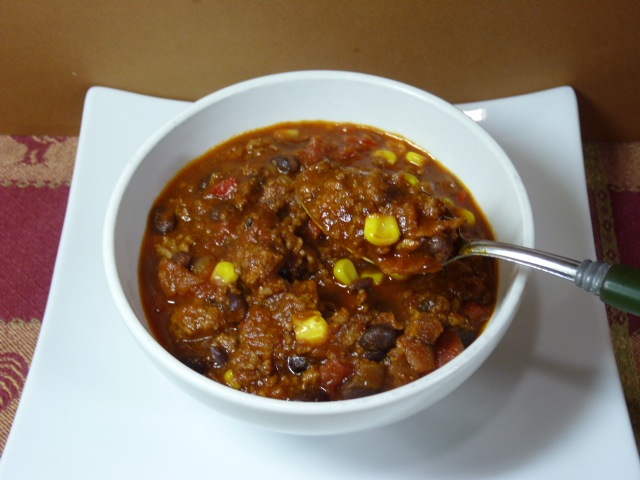
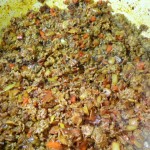
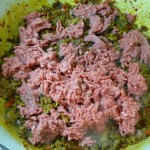
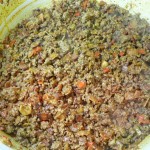
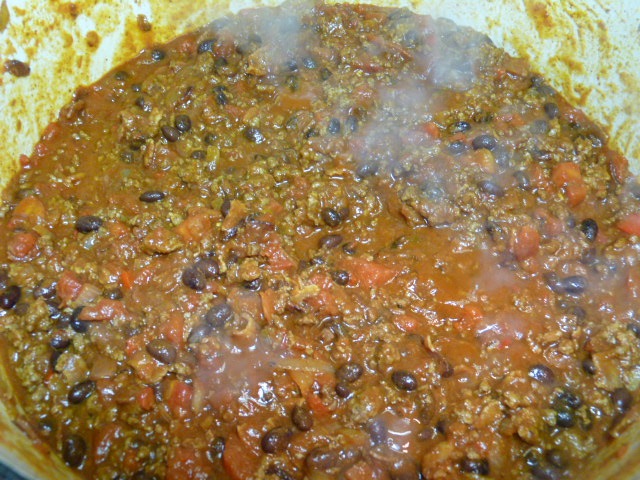
I originally posted this on CraftyFarmGirl.com in April of last year. The circumstances under which I cooked the chili was a little different though, as we’d had a huge storm that knocked out power for 5 days so I cooked it outside over a fire. I decided I would re-post it cooking it in the more traditional, stove-top way.
Original recipe published in Cook’s Illustrated Magazine, March 1, 2003. Revised by Crafty Farm Girl, 2010 and 2011
Makes about 3 quarts, serving 8 to 10
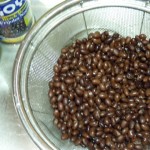
Adding the spices to the pan with the aromatics boosts their potency. For this chili recipe, add the beans with the tomatoes so they cook enough to absorb flavor but not so much that they fall apart. Cooking the chili with the lid on for half of the cooking time resulted in the best consistency.
Good choices for condiments include diced fresh tomatoes, diced avocado, sliced scallions, chopped red onion, chopped cilantro leaves, sour cream, and shredded Monterey Jack or cheddar cheese. If you are a fan of spicy food, you can use a little more of the red pepper flakes or cayenne — or both. The flavor of the chili improves with age; if possible, make it a day or up to five days in advance and reheat before serving. Leftovers can be frozen for up to a month. This is one of the only chili’s that I make that I use no toppings whatsoever on; no cheese, no onion, nothing — it’s great just the way it is.
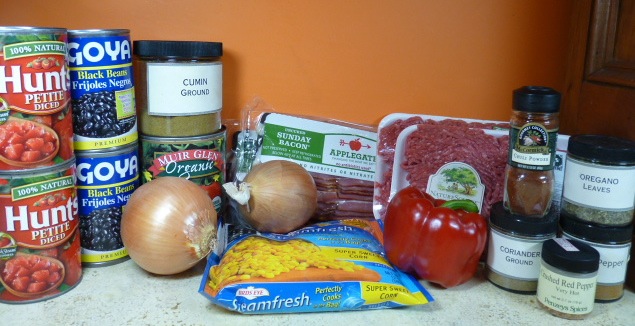
Ingredients
Instructions



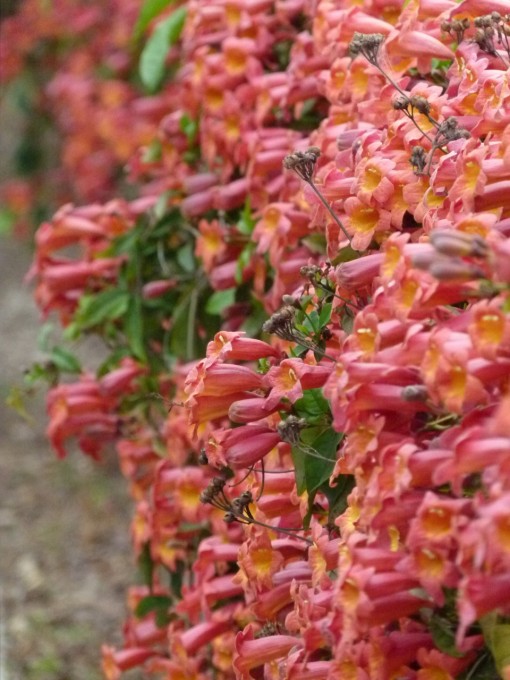
This was a fence in the King Charles Historic District of San Antonio this past weekend. Spring had truly arrived in Texas and all flowering trees were in full bloom and so were the early flowers.